Edible Math Without Tears
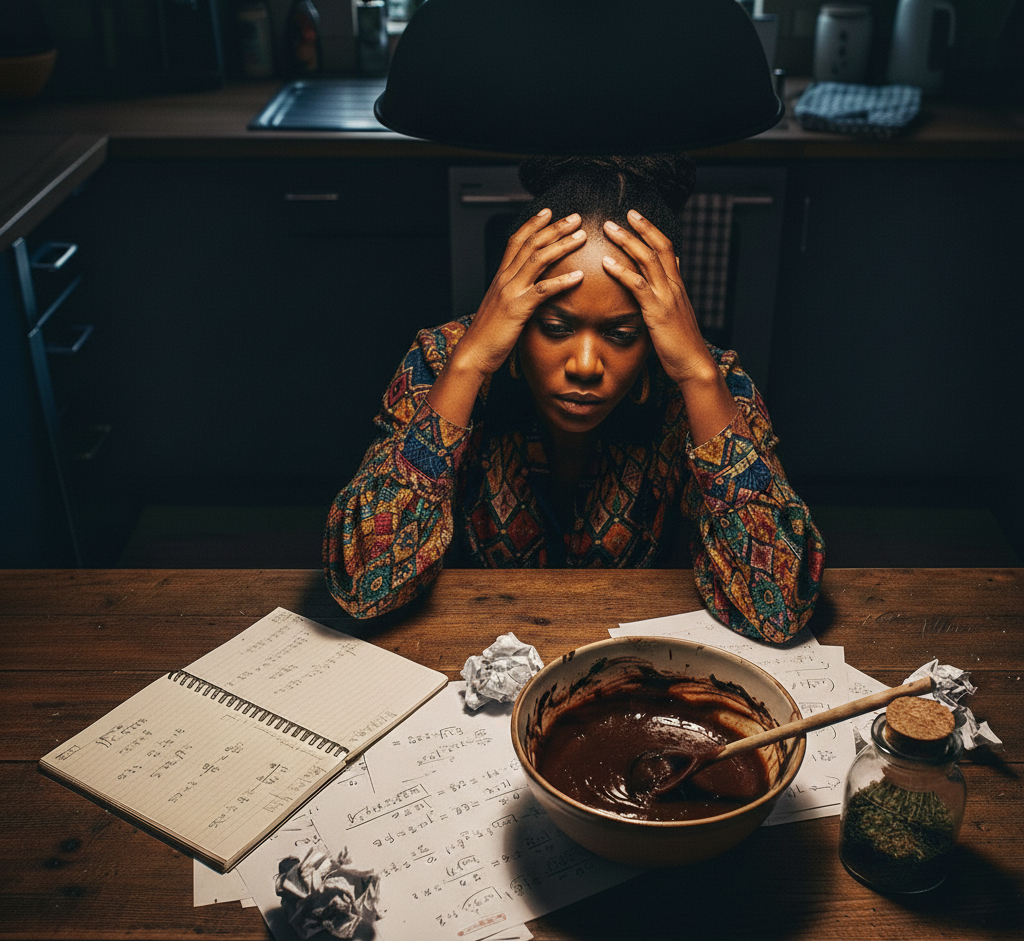
Edible dosing has a reputation for being intimidating — overly technical, unnecessarily stressful, and often framed as something you either “get” or don’t. In reality, most of the anxiety around edibles doesn’t come from the math itself. It comes from the way we’re taught to approach it: too fast, too much, and without enough context for how cannabis actually fits into real life.
For me, dosing has never started with numbers. It starts with intention. I first think about how I want to feel, then about how much I’m making. Because most of the time, I’m testing what I’m baking or cooking, and I do that in small batches by design. Smaller quantities offer more control. They leave room for adjustment. And they remove the pressure to “get it right” on the first try. Edibles don’t need to be dramatic to be effective.
Simplicity matters — especially when you live with ADHD. When something feels overly complicated, it becomes overwhelming fast. That’s why I rely on a principle I’ve carried for years: keep it simple. Edible math tends to fall apart when ego enters the process — when people rush, stack assumptions, or treat tolerance like a flex. But simplicity isn’t a beginner’s approach. It’s an intentional one.
There’s also an unspoken truth that rarely makes it into cannabis conversations: being too high can ruin the experience. Not just for the person consuming, but for everyone around them. Edibles deserve the same respect we give alcohol. Start low. Go slow. Know your limit. Whether you’re new or experienced, mindfulness is non-negotiable. No one wants to manage the equivalent of the sloppy drunk at the table. Consistency — not excess — is what makes an experience enjoyable.
That consistency is the real luxury. Not intensity. Not shock value. Just knowing what to expect from your body and your environment. I’ll admit, like most people, I chase momentum and ideas — a little Peter Pan energy — but chaos isn’t the goal. Sustainability is.
In my own life, cannabis is woven into a daily rhythm that supports, rather than disrupts. In the morning, I add infused creamer to my coffee to help manage ADHD while staying calm and focused. During creative work, I may use cannabis intentionally, though I prefer flower when I’m deep in the process. And in the early evening — around six — my partner and I might share what we jokingly call a midnight snack. Early enough to support the rest of the night: homework with a first grader, dinner, playtime, and getting a two-year-old settled without unraveling. That’s not escapism. That’s regulation.
Cannabis supports me when my nervous system is overstimulated and I need help settling back into my body. It stops being helpful when I can’t step away from it. That line matters. Intentional use isn’t about perfection; it’s about awareness.
I built the dosing calculator because edible math doesn’t need fear attached to it. It needs clarity. Something approachable. Something that doesn’t talk down to people or assume recklessness. Tools that work with real brains, real schedules, and real lives. Edibles should feel accessible, even enjoyable — not like a test you’re destined to fail.
If edibles have ever made you feel unsure or hesitant, understand this: the problem isn’t you. At 125 Broadstreet, we approach cannabis with clarity and intention, cultivating a space where Black women feel grounded, capable, and supported. Edible dosing works best when it’s approached with care, not pressure.
That’s the spirit behind the brownie recipe and dosing calculator. Not complexity — but confidence. Not excess — but intention.
At the end of the day, cannabis should feel enjoyable — something you understand, something you can trust, and something that fits into your life without the headache or added pressure.