Cannabis Terpenes: The Aromas and Effects Explained
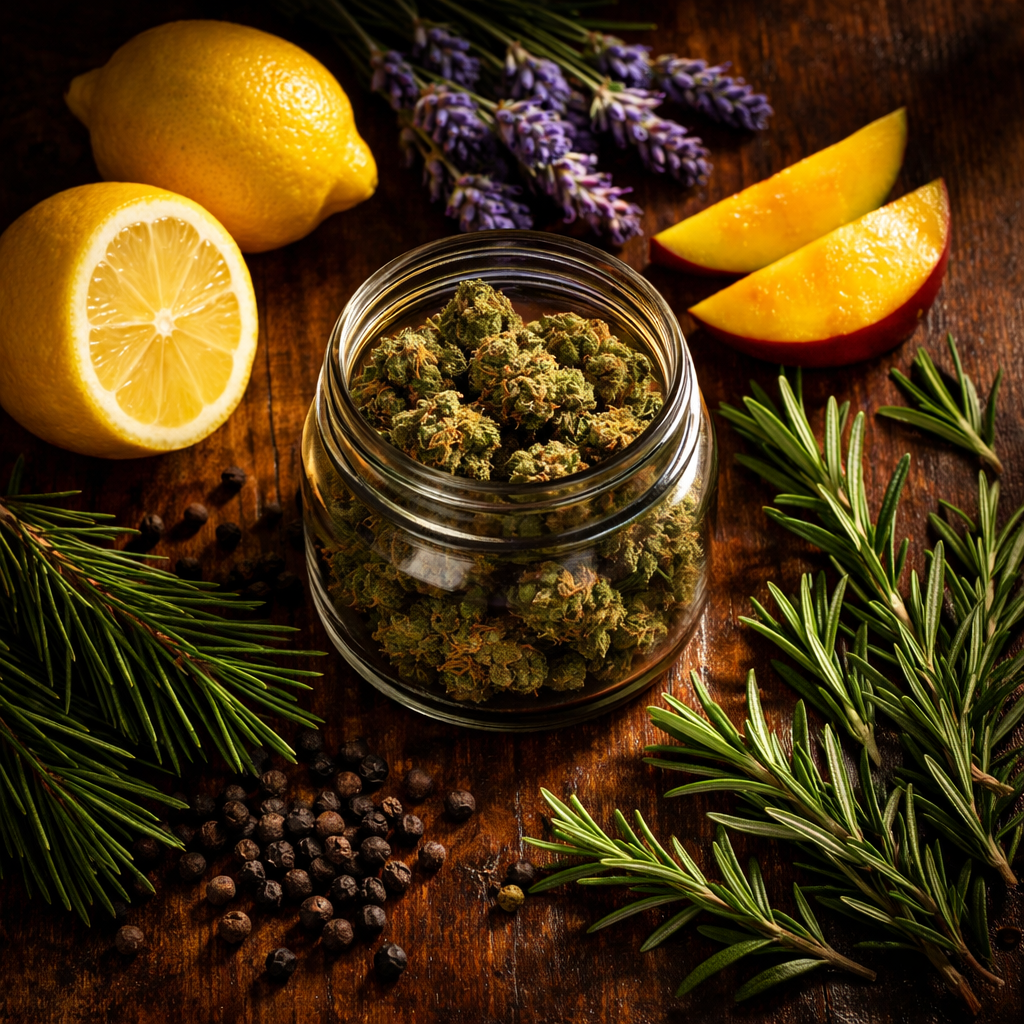
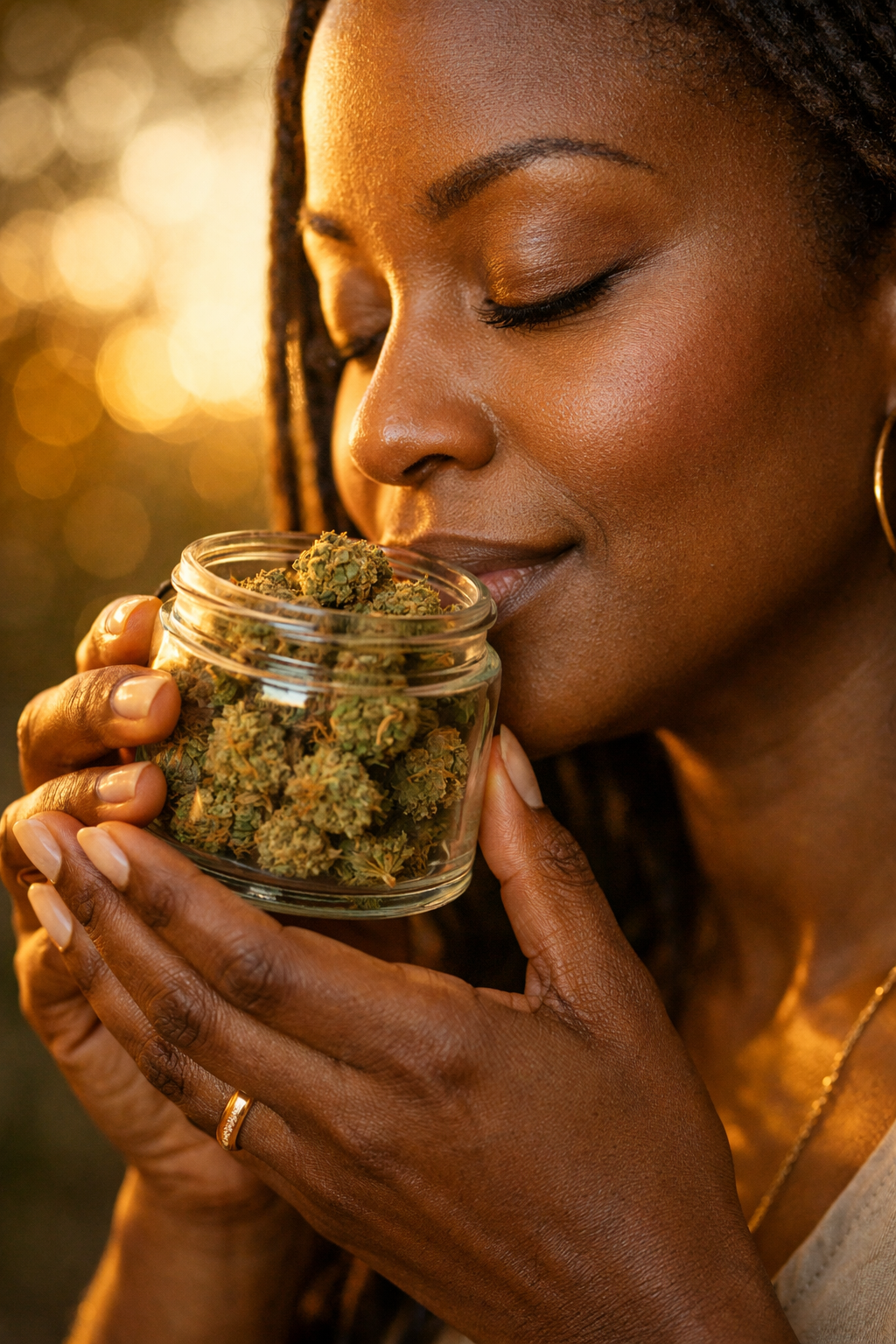
Your nose already knows. You just didn't have the language for it…..
You ever pick up a jar of flower and just… stop? Like something in your body responds before your brain catches up? That citrusy, piney, earthy hit that makes you lean in a little closer — that's not random. That's terpenes doing what they've always done, and girl, they've been working overtime with zero credit.
We talk a lot about THC. We chase percentages like they're the only number that matters. But if you've ever smoked two strains with identical THC levels and felt completely different — one had you locked to the couch, the other had you reorganizing your pantry at midnight — terpenes are why.
Let me break it down.
So What Are Terpenes, Really?
Terpenes are aromatic compounds found in almost every plant. They're what makes lavender smell like calm, lemons smell like clean, and pine trees smell like a deep breath. They're not exclusive to cannabis — they're in your kitchen herbs, your fruit bowl, your favorite candle.
But cannabis? Cannabis produces them in a way that's almost unfair. Rich, layered, complex — and every strain has its own signature blend.
The plant makes terpenes in the same tiny glands that produce THC and CBD, called trichomes — those little sparkly crystals you see on flower. Terpenes evolved as a survival tool: keep the bugs away, attract pollinators, protect against heat and UV. For us, they translate into flavor, aroma, and a whole lot of nuance in how a session feels.
Terpenes vs. Cannabinoids — What's the Difference?
Think of it this way: cannabinoids like THC and CBD are the main event. They bind to receptors in your endocannabinoid system and produce the core effects — the high, the calm, the relief.
Terpenes are the context. They shape the environment around those effects, nudging the experience in one direction or another. They don't get you high on their own, but they absolutely influence how your high feels.
That's why I've always said: stop chasing the highest number and start paying attention to the full profile. The number tells you the volume. The terpenes tell you the song.
The Entourage Effect: The Whole Band, Not Just the Lead
There's a concept in cannabis science called the entourage effect, and it basically says this: all the compounds in cannabis — cannabinoids, terpenes, flavonoids — work better together than any single one does alone.
You know how a dish can have the right protein but still taste flat without the seasoning? Same idea. THC is the protein. Terpenes are the seasoning that makes the whole thing make sense.
This is actually the reason I built the dessert menu the way I did. The full experience matters. One note is never enough.
The Terpenes Worth Knowing
Here's your cheat sheet — the most common terpenes you'll find in cannabis, what they smell like, where else you've encountered them, and how they tend to feel.
Myrcene Smells like: Ripe mango, earthy musk, cloves. Also in: Mangoes, hops, lemongrass, thyme. The vibe: This is the most abundant terpene in most commercial strains, and it's the one most associated with that classic body-heavy, couch-settling feeling. If a strain makes you want to sink into the cushions and not move — that's probably myrcene doing its thing. It's also thought to help cannabinoids absorb more efficiently, which means the effects may hit faster and deeper. Best for: Evening. Rest. Letting go of the day.
Limonene Smells like: Lemon peel, fresh orange, citrus zest. Also in: Citrus rinds, juniper, peppermint. The vibe: Bright, lifted, mood-boosting. Limonene is the one that makes a session feel less like you're slowing down and more like you just opened a window. It's associated with stress relief, elevated mood, and mental clarity. Strains high in limonene tend to lean social and creative. Best for: Daytime. Good company. Getting something done.
Caryophyllene Smells like: Black pepper, cloves, a little warmth. Also in: Black pepper, cinnamon, basil, cloves. The vibe: Here's the interesting one — caryophyllene is the only terpene that can directly bind to cannabinoid receptors (specifically CB2, which lives in the immune system). That means it may have real anti-inflammatory potential on its own. It's often associated with stress relief and calm without sedation. Deep, quiet, grounding. Best for: Unwinding without shutting down. Stress, tension, inflammation.
Linalool: Smells like: Lavender, soft florals, a hint of spice. Also in: Lavender, coriander, birch trees. The vibe: You already know this one from aromatherapy. Linalool is calming, anxiety-reducing, and gently sedating without feeling heavy. It's the terpene that makes you exhale slowly and actually mean it. Best for: Anxiety, sleep, the hour before bed when your brain won't stop.
Pinene: Smells like: Pine forest, fresh rosemary, clean air. Also in: Pine needles, rosemary, basil, dill. The vibe: Alert, clear, focused. Pinene is the terpene that keeps things sharp. There's also some research suggesting it may counteract short-term memory effects from THC — which is interesting if you want the calm without the fog. Best for: Focus. Creative work. Daytime use when you need to stay present.
Terpinolene: Smells like: Floral, herbal, piney, a little citrusy — complex in the best way. Also in: Apples, cumin, lilacs, tea tree. The vibe: Terpinolene is less common but worth knowing. It tends to feel uplifting and cerebral — the kind of high that gets you thinking, talking, and moving. Strains with high terpinolene are often described as "heady." Best for: Social settings, creative projects, anything that benefits from a little spark.
Humulene: Smells like: Earthy, woody, slightly hoppy. Also in: Hops, ginseng, coriander. The vibe: Humulene is being studied for its anti-inflammatory properties, and it's one of the few terpenes associated with appetite suppression — which, yes, is a bit of a wild card in cannabis. Low-key, grounding, functional. Best for: Relaxation, inflammation, days when you want the benefit without the munchies situation.
Trust Your Nose
Here's my actual advice: smell it before you buy it.`m
If you walk past something and your body responds — not just "oh that's interesting" but something more instinctive, something that makes you stop — pay attention to that. There's growing evidence that we may be drawn to terpenes our bodies need, which is honestly just the plant doing what it was designed to do.
I've said it before and I'll keep saying it: stop looking only at the THC number on the label. The number tells you how loud it is. The terpene profile tells you what it sounds like. And if you've ever had a strain that felt completely different from another strain with the same percentage, now you know why.
Keep a little notes app log if you're the type. Strain name, how it smelled, how it felt. Over time, you'll start to see your own patterns emerge.
Terpenes in the Kitchen
This is the part that excites me most, and it's literally the foundation of everything I'm building at 125 Broadstreet.
Terpenes aren't just a cannabis thing. They're everywhere — in every herb, every fruit, every spice that makes food worth eating. When I'm developing a new dessert, I'm thinking about terpene profiles the same way a perfumer thinks about fragrance notes. What does limonene pair with? (Lemon curd, citrus glaze, anything bright.) What does linalool open up next to? (Lavender, honey, floral cream.) What does myrcene ask for? (Something warm, rich, slow.)
The cannabis in our edibles isn't just an add-on. It's an ingredient. And like any good ingredient, it has to belon
How to Keep Your Terpenes Intact
Terpenes are fragile. Heat, light, and oxygen break them down fast, which is why a lot of pre-packaged products smell like almost nothing by the time you open them.
To protect them: store your flower in an airtight, opaque container, somewhere cool and dark. Avoid leaving it in a hot car or on a sunny shelf. If you're vaporizing, lower temperatures preserve more terpenes than higher ones — you'll get more flavor and a fuller experience.
And if you're making infusions? Low and slow is always the move. A rushed infusion at too-high a temperature is how you lose everything interesting about the plant.
Quick Answers
Do terpenes get you high? No — not on their own. But they shape the quality of the experience significantly through the entourage effect.
Are they safe? Yes. Terpenes are in foods, cosmetics, and essential oils. They're well-tolerated. Highly concentrated isolated terpenes can cause irritation, which is why whole-plant consumption is generally preferable.
Can terpenes be added to products? They can, and often are — especially in vape cartridges and extracts. Look for "cannabis-derived terpenes" for the most authentic profile. Botanically-derived terpenes (from other plants) are also used and aren't necessarily inferior, just different.
Why does the same strain sometimes feel different? Growing conditions affect everything. Light, temperature, soil, harvest timing, and how the flower was cured all influence the final terpene profile. Two plants from the same genetics can smell and feel noticeably different depending on how they were grown.

The Bottom Line….
Cannabis is a complex plant, and terpenes are a big part of what makes every strain its own thing. They're why the same THC percentage can feel completely different depending on what it's paired with. They're why aroma is actually useful information, not just a fun bonus.
At 125 Broadstreet, we think about this every single time we develop something new. What does it smell like? What does it pair with? What terpene conversation is the cannabis having with the other ingredients? Because flavor and effect aren't two separate things. They're the same experience, working together.
That's the whole philosophy. And now you have the language to go with it.
— Cheasleauen Your fav sis with a spliff & R&D Culinary Director / Founder
Curious about what terpene matches your favorite song or dessert mood? Drop it in the comments. You already know I'm going to have thoughts.