Breaking Stereotypes: Black Women Pioneering Cannabis'
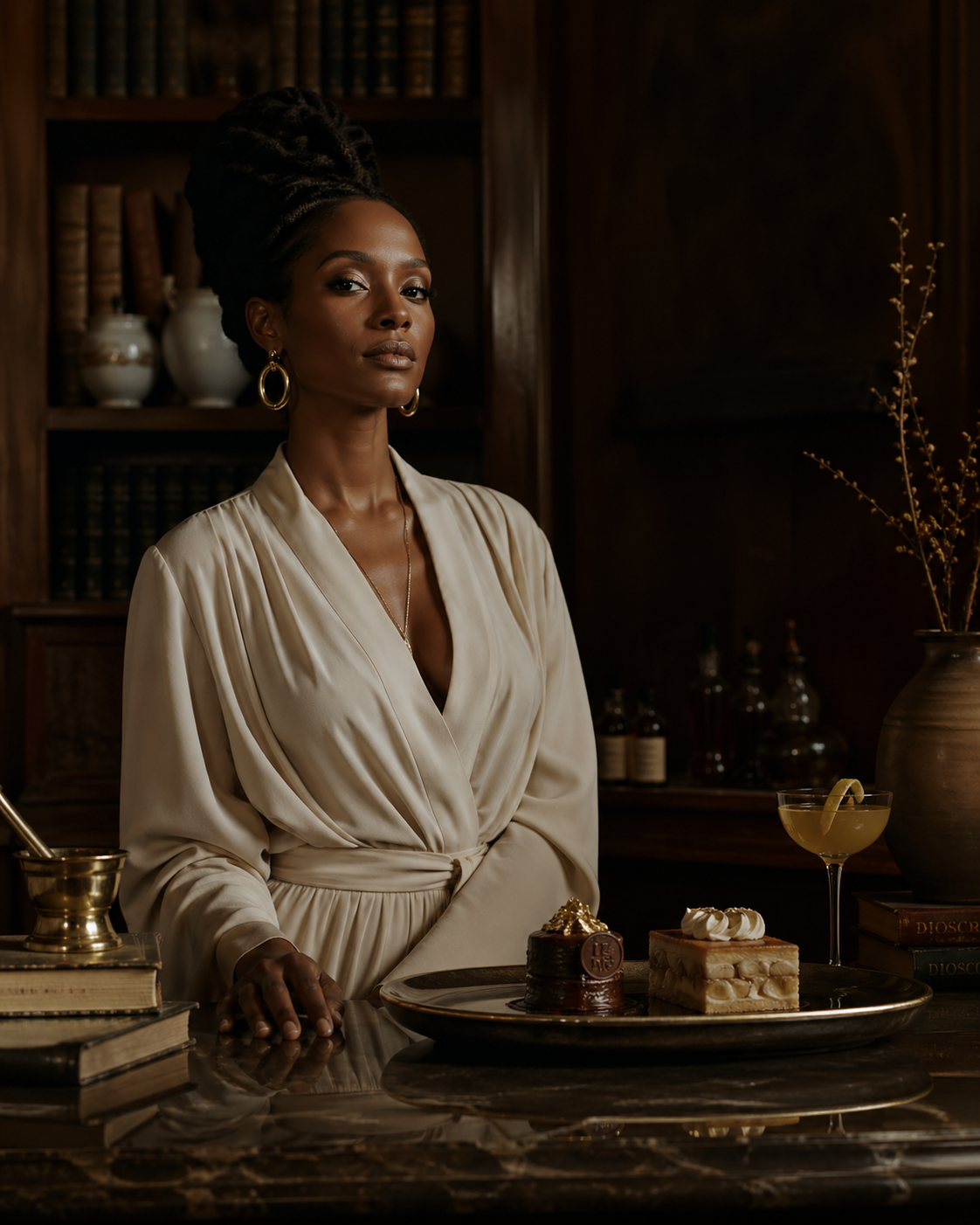
The Black women who built, grew, and refused to be written out of cannabis — before the industry even knew what to call itself.
"Black women didn't just enter the cannabis industry. We planted the seeds — and the industry grew up around us."— Your good sis with a spliff
Let's be real for a second. When most people picture a cannabis entrepreneur — the kind who headlines tech conferences, lands dispensary shelf space, and gets profiled in Forbes — they're not picturing us. They never were. The image the mainstream industry built was deliberate: young, white, male, "wellness-forward." Clean aesthetics. Venture capital. A narrative that made it easy to forget who was actually doing this work long before it was legal, celebrated, or profitable.
But Black women have always been here. Growing, cooking, healing, building community. The War on Drugs didn't erase us — it just tried to. And as legal cannabis markets explode across the country, a generation of Black women founders, cultivators, chefs, and advocates are making sure this time, the record gets set straight.
This post is a love letter and a history lesson. It's for anyone who's ever felt like an outsider in a space their people helped create. And it's for every Black woman in cannabis who's been told — explicitly or implicitly — that this industry wasn't made for her. It was. Let's talk about it.
The History They Didn't Teach You
Before cannabis was a lifestyle brand, before the dispensary was a glass-and-marble boutique, before terpene profiles and 1:1 ratios became dinner conversation — Black and Brown communities were the ones carrying herbal and plant-based healing traditions. Cannabis wasn't some novelty. It was medicine, ceremony, community. Knowledge passed down through generations.
Then came prohibition. The criminalization of cannabis in America was not random. It was racialized by design. Harry Anslinger, the architect of federal prohibition in the 1930s, weaponized anti-Black and anti-Mexican racism to build his case. The plant didn't change. The politics around who got to use it — and who got locked up for it — did.
For decades, Black women disproportionately absorbed the consequences: mothers separated from families, communities starved of economic opportunity, entire neighborhoods destabilized by enforcement that was never equally applied. The cost was immense. And yet — the knowledge survived. The culture survived. And when legalization finally started sweeping state by state, Black women showed up, not as newcomers, but as inheritors.
Share of US cannabis businesses majority-owned by Black entrepreneurs — despite Black people making up ~40% of consumers (2026)
Rate at which Black Americans are arrested for cannabis possession vs. white Americans — despite near-equal usage rates (ACLU/NORML)
Projected US legal cannabis market value in 2026 — a booming industry still leaving Black founders behind
The Pioneers Holding It Down
There's a growing ecosystem of Black women reshaping what cannabis leadership looks like. These are not token diversity hires. These are founders, operators, advocates, and artists who built their lanes from scratch — often without access to the capital, licensing shortcuts, or networks that others took for granted.
Dasheeda Dawson
Known globally as "The WeedHead," Dawson is a bestselling author, Princeton alum, and award-winning strategist. She served as Cannabis Program Manager for the City of Portland before being appointed Founding Director of Cannabis NYC by Mayor Eric Adams in 2022 — one of the most influential cannabis policy roles in the country.
Wanda James
Former US Navy lieutenant and Fortune 100 executive, James co-founded Simply Pure in Denver — the first Black-owned, veteran-owned cannabis dispensary in America (2009). A tireless advocate for equity and criminal justice reform, she was elected to the University of Colorado Board of Regents and announced a run for US Congress in 2025.
Kika Keith
Founder and CEO of Gorilla Rx Wellness — the first Black woman-owned dispensary in Los Angeles, opened in 2021 in the Crenshaw district. Before opening her doors, Keith co-founded the Social Equity Owners and Workers Association, sued the city of LA for fair licensing, and won — securing 100 additional licenses for people of color.
Hope Wiseman
Spelman College grad and former investment banker, Wiseman became the youngest Black woman to own a cannabis dispensary in the US when she co-founded Mary & Main in Prince George's County, Maryland at age 25. She's also the founder of Supernova Women, a nonprofit building a pipeline for women of color in cannabis.
Roz McCarthy
Founder and CEO of Minorities for Medical Marijuana (M4MM) — named Cannabis Industry Organization of the Year by High Times — and founder of Black Buddha Cannabis. McCarthy has spent decades fighting for people of color to have real access to the cannabis industry through education, advocacy, and policy across 15+ states.
Shanita Penny
A management consultant and powerhouse in cannabis policy, Penny served as Board President of the Minority Cannabis Business Association (MCBA) — the first and largest nonprofit dedicated to equal access and economic empowerment for cannabis businesses most impacted by the War on Drugs.
At 125 Broadstreet, we see ourselves in this lineage. We're a cannabis bakery born in Marietta, Georgia, rooted in 13+ years of hospitality and a deep belief that food is how we hold each other. Our cheesecakes, tiramisu, pound cakes — they're not just products. They're an invitation. A statement that Black women belong in every corner of this industry: behind the dispensary counter, in the kitchen, on the menu, at the table where decisions are made. We built this brand during a pandemic because we believed in it. And we keep building because the culture demands it.
The Barriers Are Real — And So Is the Resistance
We can't have this conversation honestly without naming what's still happening. Access to capital remains one of the biggest obstacles. Because cannabis is still federally illegal, traditional bank financing is largely off the table — which means entrepreneurs rely on private investment. And the data on where private investment flows is not encouraging for Black women founders. Studies consistently show that Black women receive a fraction of a fraction of venture capital, in cannabis and beyond.
Licensing is another battlefield. Social equity programs were designed with the right intent — to prioritize applicants from communities most harmed by prohibition. But implementation has been messy, slow, and in many cases, gamed by well-resourced applicants who technically qualify while missing the spirit of the policy entirely. The women and families who most deserve access are still waiting.
And then there's the softer discrimination: the rooms where you're the only one, the investors who want to hear your story but not fund your business, the industry events where the panels don't look like you. The subtle and not-so-subtle message that this space was built by and for someone else.
Black women in cannabis resist this every single day. Through community-building, through mentorship, through buying from each other, through showing up loudly and unapologetically. Through brands like ours. The resistance is the product.
This is for the culture.
And the culture is us.
When you support Black women in cannabis — as a customer, a collaborator, a community member — you're not just making a purchasing decision. You're participating in something bigger. A correction. A celebration. A reclamation.
What We Can Do
Buy Black. This is foundational. When Black women-owned cannabis brands are competing for shelf space, your dollars are votes. Support directly when you can — websites, pop-ups, farmers markets, licensed dispensaries that prioritize equity brands.
Amplify. Share the stories. Repost the content. Leave the review. Tell someone about the brand you love. Word of mouth is how communities have always moved — and in an industry where advertising is severely restricted for cannabis companies, organic reach is everything.
Advocate for equity licensing. Get informed about what's happening in your state or city. Social equity cannabis policy is still being written in many markets. Public comment matters. Who you vote for matters. Local cannabis boards and commissions matter.
Show up in the room. If you have access — to investment, to networks, to platforms — use it intentionally. Introduce people. Make connections. Be the bridge you wish you'd had. The industry will look like what we collectively decide to build.
And if you're a Black woman in this industry — or watching from the edges, trying to figure out if there's a seat at the table for you — the answer is yes. Pull up. We saved you a spot.